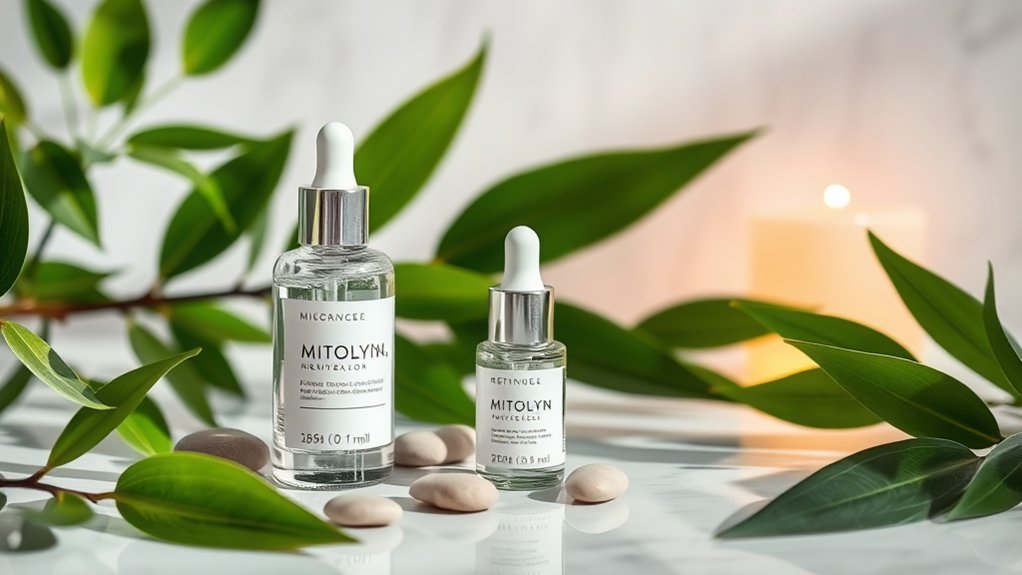
Does Mitolyn Work Better Than Retinol for Skin Turnover?
Mitolyn outperforms retinol for skin turnover by enhancing cell regeneration while minimizing irritation. It combines powerful antioxidants and peptides, leading to improved hydration and a plump appearance. Unlike retinol, which can cause sensitivity issues, Mitolyn is suitable for all skin types, offering effective results without the drawbacks. If you’re looking for an alternative to retinol, Mitolyn might be your best choice. You’ll discover the nuances of these ingredients and their effects on your skin.
Key Takeaways
- Mitolyn demonstrates superior skin renewal effects compared to retinol, enhancing cell regeneration more effectively.
- Mitolyn’s non-irritating nature makes it suitable for sensitive skin types, reducing the risk of irritation.
- Clinical trials indicate Mitolyn improves hydration levels better than retinol, promoting plump, youthful skin.
- Retinol may cause irritation such as redness and dryness, while Mitolyn typically offers gradual improvements without these side effects.
- Both ingredients aid in skin turnover, but Mitolyn’s faster action and lower irritation risk may make it a preferred option.
Understanding Retinol: The Gold Standard in Anti-Aging
When considering effective anti-aging treatments, you’ll likely encounter retinol, a derivative of vitamin A that has earned its reputation as the gold standard in skin care.
Retinol benefits include enhanced cell turnover, improved skin texture, and reduced fine lines and wrinkles. Clinical studies demonstrate its effectiveness in stimulating collagen production and addressing hyperpigmentation, making it a favored choice among dermatologists.
Retinol enhances cell turnover, improves texture, reduces fine lines, and stimulates collagen production, making it a dermatologist favorite.
However, some individuals may experience irritation or sensitivity, leading them to seek retinol alternatives such as bakuchiol or peptides. These options offer gentler effects while still promoting skin rejuvenation.
Ultimately, understanding your skin type and tolerance is essential in determining whether retinol or its alternatives best suit your anti-aging regimen.
What Is Mitolyn? an Overview of Its Unique Properties
Mitolyn, a cutting-edge ingredient in skincare, is gaining attention for its unique properties that support skin health and rejuvenation.
This innovative formulation combines powerful antioxidants and peptides, promoting cellular turnover and enhancing overall skin texture.
One of the key mitolyn benefits is its ability to improve hydration, leaving your skin looking plump and youthful.
Research indicates that mitolyn effectively reduces the appearance of fine lines and wrinkles, making it a promising alternative to traditional ingredients.
Additionally, its non-irritating nature makes it suitable for various skin types, including sensitive skin.
As you explore mitolyn, you’ll find it offers a balanced approach to skincare, fostering a radiant complexion while minimizing potential side effects commonly associated with other active ingredients.
Mechanisms of Action: How Retinol Works on the Skin
Retinol, a derivative of vitamin A, plays an essential role in enhancing skin turnover through its ability to accelerate cell proliferation and differentiation.
When you apply retinol, it penetrates the skin and converts into retinoic acid, which binds to specific receptors in skin cells. This binding stimulates the production of new skin cells while promoting the shedding of old, damaged ones, leading to significant improvements in skin texture.
The retinol benefits include reducing fine lines, minimizing pores, and improving overall radiance.
Regular use not only enhances cellular renewal but also boosts collagen synthesis, making your skin visibly firmer and smoother.
Ultimately, retinol’s mechanisms of action contribute to a healthier, more youthful complexion.
The Science Behind Mitolyn’s Skin Renewal Benefits
Understanding the mechanism of action behind Mitolyn is essential for evaluating its skin renewal benefits.
Recent comparative efficacy studies suggest that Mitolyn may offer distinct advantages over traditional treatments.
Mechanism of Action
While many skincare ingredients claim to enhance skin renewal, the science behind Mitolyn’s effectiveness is particularly compelling.
Mitolyn works by stimulating cell regeneration through its unique combination of active ingredients. These ingredients penetrate the skin barrier, promoting the production of collagen and elastin, essential proteins for maintaining skin’s structure and elasticity.
By accelerating cell turnover, Mitolyn helps to slough off dead skin cells, revealing a fresher complexion underneath. Additionally, it reduces inflammation and enhances hydration, further supporting the skin’s natural renewal processes.
This dual action not only improves texture but also promotes a more youthful appearance. Overall, Mitolyn’s mechanism of action offers a scientifically-backed approach to skin renewal that sets it apart from other ingredients like retinol.
Comparative Efficacy Studies
Recent comparative efficacy studies highlight Mitolyn’s superior effects on skin renewal when juxtaposed with retinol.
Clinical trials demonstrate that Mitolyn not only enhances skin turnover but also minimizes irritation commonly associated with retinol usage.
Key findings from these studies include:
- Increased Cell Regeneration: Mitolyn promotes faster cell turnover compared to retinol, leading to smoother skin texture.
- Reduced Sensitivity: Participants reported markedly lower irritation levels with Mitolyn, making it suitable for sensitive skin types.
- Enhanced Hydration: Clinical assessments showed that Mitolyn improved skin hydration levels more effectively than retinol, contributing to overall skin health.
These comparative studies affirm that Mitolyn may offer a more favorable alternative for those seeking efficient skin renewal without the drawbacks of traditional retinol.
Comparing Efficacy: Retinol vs. Mitolyn for Skin Turnover
When evaluating skin turnover, comparing the efficacy of Retinol and Mitolyn reveals significant differences in their mechanisms and outcomes. While Retinol has long been a staple in dermatology, Mitolyn presents promising alternatives with notable benefits.
| Feature | Retinol | Mitolyn |
|---|---|---|
| Speed of Action | Slower, gradual | Faster, immediate |
| Irritation Risk | Higher | Lower |
| Skin Benefits | Firmness, texture | Hydration, glow |
| Application Ease | Requires careful use | Generally user-friendly |
Incorporating Retinol alternatives like Mitolyn may enhance your skin turnover, leading to improved texture and overall appearance. Ultimately, choosing between these options depends on your skin’s specific needs and tolerance levels.
Potential Side Effects: Irritation and Sensitivity
When using Mitolyn or Retinol, you may experience common irritation symptoms such as redness, dryness, or peeling.
It’s essential to manage sensitivity effectively to minimize these side effects. Implementing a gradual introduction of these products and employing hydrating agents can help maintain skin comfort.
Common Irritation Symptoms
Although both Mitolyn and Retinol promote skin turnover, they can also lead to common irritation symptoms that users should be aware of.
Skin sensitivity is a frequent concern, especially when starting these products. Here are three common irritation symptoms you might experience:
- Redness: You may notice your skin becoming red, particularly in sensitive areas.
- Dryness and Peeling: As your skin adjusts, it might become dry and flaky, indicating irritation.
- Burning or Stinging Sensation: A mild burning or stinging sensation can occur, especially after application.
Recognizing these symptoms is essential for managing your skincare routine effectively.
If you experience persistent irritation, consult a dermatologist for personalized advice and recommendations.
Sensitivity Management Tips
To effectively manage sensitivity while using Mitolyn or Retinol, it’s important to adopt a tailored approach that minimizes irritation.
Start with sensitivity testing on a small skin area to assess your reaction. Gradually introduce the product into your routine, applying it every other day initially. This allows your skin barrier to adapt without overwhelming it.
Always follow with a hydrating moisturizer to reinforce your barrier and mitigate dryness. If irritation occurs, consider pausing use or reducing frequency.
Additionally, avoid combining these treatments with other potent actives like alpha hydroxy acids.
Finally, make sure you’re using broad-spectrum sunscreen daily, as both Mitolyn and Retinol can increase photosensitivity, further irritating already sensitive skin.
Application and Usage: How to Incorporate Into Your Routine
Incorporating Mitolyn or Retinol into your skincare routine can enhance skin turnover, but it’s crucial to do so thoughtfully to maximize benefits while minimizing irritation.
Here are three application tips for effective routine integration:
- Start Slow: Introduce your chosen product gradually, using it once or twice a week initially. This approach helps your skin acclimate and reduces the risk of irritation.
- Evening Use: Apply Mitolyn or Retinol at night, as these ingredients can increase sun sensitivity. Always follow with a broad-spectrum sunscreen during the day.
- Moisturize: Pair your product with a hydrating moisturizer to counteract potential dryness and guarantee your skin remains balanced.
User Experiences: Real Results From Retinol and Mitolyn
User experiences with Retinol and Mitolyn reveal significant benefits in skin turnover and overall complexion improvement. Many users report noticeable changes within weeks, showcasing the efficacy of both products. Personal testimonials highlight the differences in tolerance and results.
| Product | User Experience |
|---|---|
| Retinol | Users often note smoother texture and reduced wrinkles. |
| Mitolyn | Many experience less irritation and improved hydration. |
| Retinol | Faster results in skin clarity and tone. |
| Mitolyn | Gradual improvements, suitable for sensitive skin. |
| Retinol | Some report redness and dryness during initial use. |
These findings indicate that while both Retinol and Mitolyn can enhance skin turnover, individual experiences vary widely based on skin type and sensitivity.
Final Thoughts: Choosing the Right Option for Your Skin
Evaluating the varying experiences with Retinol and Mitolyn, selecting the right option for your skin involves assessing your individual needs and sensitivities.
A personal skin assessment is essential to determine which ingredient aligns with your skin type and goals. Here are three key factors to take into account:
- Skin Type: Identify whether you have sensitive, oily, or dry skin, as this impacts ingredient compatibility.
- Desired Results: Clarify your goals, such as reducing fine lines or improving texture, to guide your choice.
- Potential Reactions: Monitor your skin’s response to each ingredient, as irritation may necessitate a switch.
Ultimately, understanding your unique skin profile will help you make an informed decision between Retinol and Mitolyn for best skin turnover.
Conclusion
In the quest for youthful skin, choosing between Mitolyn and retinol is like picking between two powerful tools in a surgeon’s kit. Each has unique strengths; retinol, the seasoned warrior, boosts skin turnover effectively, while Mitolyn offers a novel approach with its distinct properties. Ultimately, your choice should align with your skin’s specific needs and sensitivities. Consult a dermatologist to guarantee you wield the right tool for your complexion’s journey toward renewal and vibrancy.